Credit Optimization
Structured, beginner‑friendly methods for improving personal credit profiles. This category covers credit growth, score behavior, reporting systems, and repeatable workflows for strengthening financial positioning.
Credit Limit Increase Trick That Raises Your Score Fast
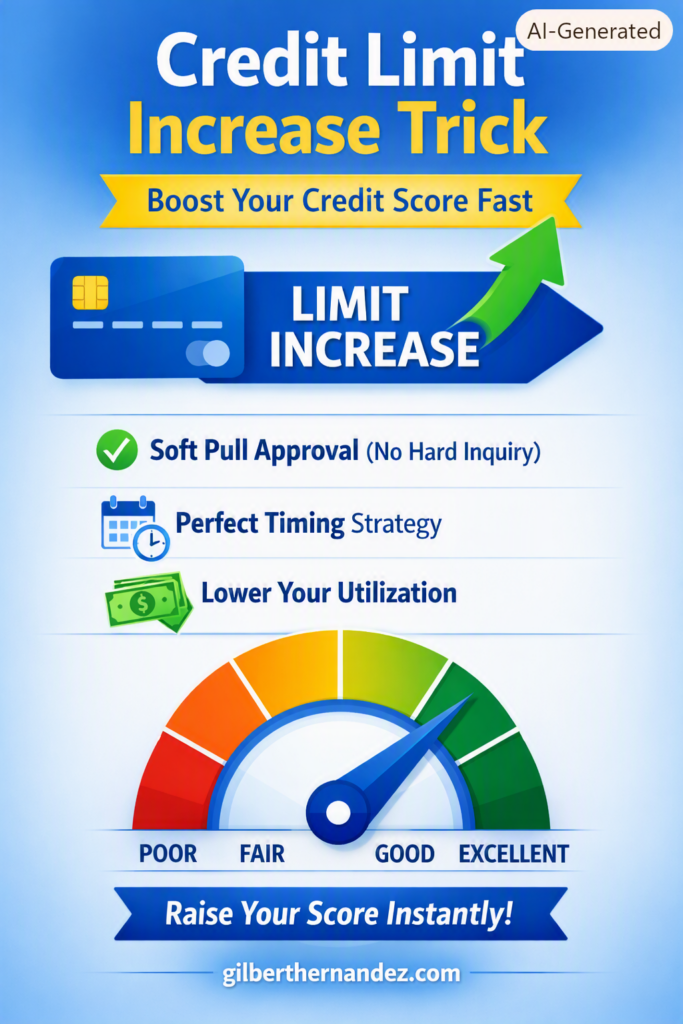
infographic showing credit limit increase, soft‑pull approval, timing strategy, and utilization drop.
Credit limit increases are one of the easiest ways to raise your credit score — and you don’t have to spend a dollar to do it. When your limit goes up, your utilization drops instantly, and that alone can trigger a 20‑ to 60‑point jump. The key is knowing how to request an increase the right way, at the right time, without taking a hard inquiry. This credit limit increase trick works fast because it lowers utilization instantly.
How This Credit Limit Increase Trick Works
Your credit score is heavily influenced by credit utilization — the percentage of your available credit you’re currently using. When your limit goes up, your utilization goes down, even if your balance stays the same. That’s why a limit increase can move your score overnight.
Example:
- $1,000 balance on a $5,000 limit = 20% utilization
- $1,000 balance on a $10,000 limit = 10% utilization
Same balance. Better score.
The Math Behind Utilization and Limits
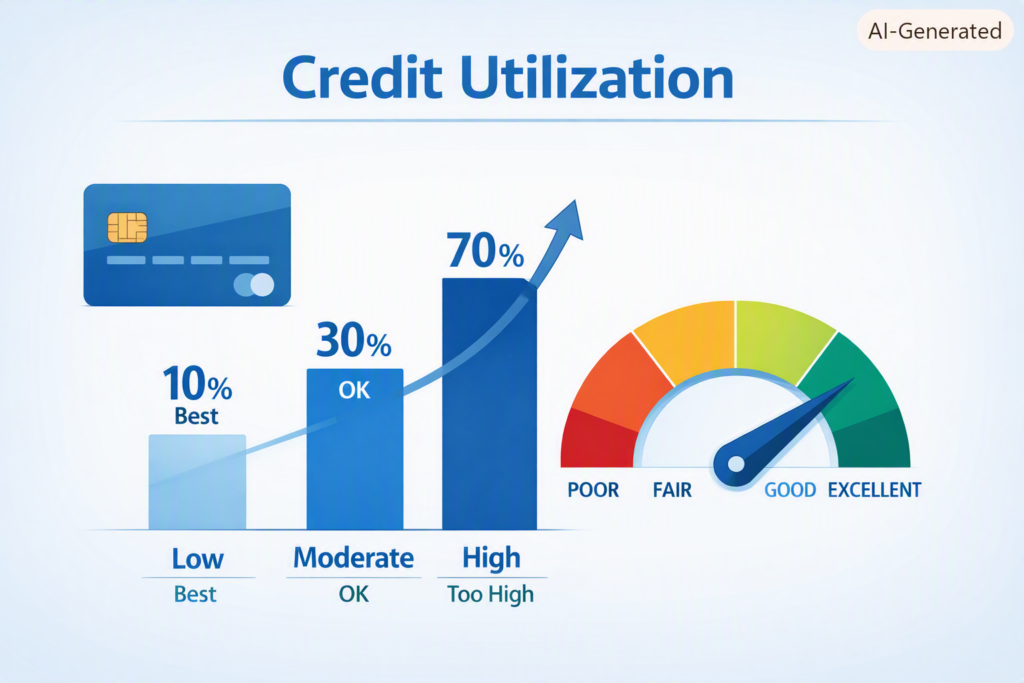
FICO and VantageScore both reward lower utilization. The best ranges are:
- 10% or lower → ideal
- 30% or lower → acceptable
- 70% or higher → score killer
A limit increase pushes you into better zones without paying anything down.
Soft‑Pull vs. Hard‑Pull Increases
There are two types of limit increases:
Soft‑Pull Increase
- No impact on your credit score
- Instant approval or denial
- Usually done online or in the app
Hard‑Pull Increase
- Shows up as a credit inquiry
- Can temporarily lower your score
- Often used by older banks or during manual reviews
Your goal is simple: get the soft‑pull increase.
Banks Known for Soft‑Pull Limit Increases
These lenders typically approve increases without a hard inquiry:
- American Express
- Discover
- Capital One
- Apple Card (Goldman Sachs)
- Navy Federal Credit Union
Most of these allow requests every 6 months.
Timing Your Request for Maximum Approval
Banks look at your recent behavior. You want to request an increase when your profile looks strongest:
- Your balance is low
- You’ve made on‑time payments for 3–6 months
- You’ve used the card consistently
- You haven’t requested multiple increases across different cards recently
The best time to request is right after a payment posts and your reported balance is low.
The “Double‑Dip” Method (Advanced)
Some banks allow a second increase immediately after the first — if your profile supports it.
Here’s how it works:
- Request a soft‑pull increase online.
- If approved, wait 30 seconds.
- Request again through the automated phone system or chat.
This doesn’t work everywhere, but when it does, you can double your limit in minutes.
Automatic Limit Increases
Some banks give automatic increases every 6–12 months if you:
- Use the card regularly
- Keep utilization low
- Pay on time
- Avoid maxing out the card
If you qualify, these increases happen without you asking — and without any inquiry. Most people never use this credit limit increase trick even though it’s one of the fastest ways to improve a score.
Final Takeaway
A credit limit increase is one of the fastest, easiest ways to raise your credit score. It costs nothing, takes minutes, and directly lowers your utilization. Request it at the right time, target soft‑pull lenders, and use the double‑dip method when available.
If you haven’t asked for a limit increase in the last six months, now is the time.
This limit increase trick is even more effective when combined with the utilization strategy I covered in Credit Utilization Hack.
Credit Utilization Hack: The Fastest Way to Boost Your Score
The Credit Optimization System That Makes Scores Move

The blueprint curve represents how structured credit optimization creates predictable upward movement — a visual echo of the system that makes scores rise.
When I first started helping people fix their credit, I noticed something strange. Some people worked hard and saw almost no movement. Others made a few small changes and their scores jumped fast. At first, it looked random. But it wasn’t. There was a pattern hiding underneath the chaos.
That pattern became the credit optimization system.
It’s the same system I use today, and it works because credit scores don’t respond to luck — they respond to structure. Once you understand the triggers the algorithm reacts to, you can guide your score upward in a predictable way.
1. Stabilize the Profile
In the beginning, I watched people try to build their credit on shaky foundations. They paid things down at random, disputed whatever looked wrong, and hoped the score would rise. But hope isn’t a strategy. Stability is.
When your balances, behaviors, and reporting patterns stop sending mixed signals, the algorithm finally knows what to reward. This is the moment your score becomes ready to move.
2. Optimize Utilization
One client came to me frustrated. She had paid off several cards, yet her score barely moved. When I looked closer, I saw the problem: her utilization wasn’t structured. It was scattered.
Once we reorganized her balances — not just lowered them — her score jumped within days. That’s the power of optimized utilization. It’s the fastest lever in the entire credit system.
3. Build Strategic Accounts
Over time, I learned that not all accounts help you. Some stall your score. Some drag it down. And a few create powerful upward pressure. When you choose accounts strategically, your score starts climbing with less effort.
This step is where people often break momentum without realizing it. The wrong account can freeze your progress. The right one can accelerate it.
4. Trigger Score Movement
Once the foundation is stable and the utilization is optimized, the real magic begins. This is where you activate the score‑movement triggers — the actions that cause the algorithm to recalculate in your favor.
When these triggers are done in the right order, your score doesn’t just rise. It rises predictably.
5. Maintain the Upward Curve
The final step is simple: keep the system intact. When your profile stays optimized, your score continues rising month after month. This is how you create long‑term movement instead of temporary spikes.
I’ve watched this system transform credit profiles over and over again. Not because it’s complicated, but because it follows the same structural rules the algorithm already uses.
If you want predictable score movement, you need a predictable system. This is the one that makes scores move.