The Pros and Cons of Private Money Lending in Real Estate
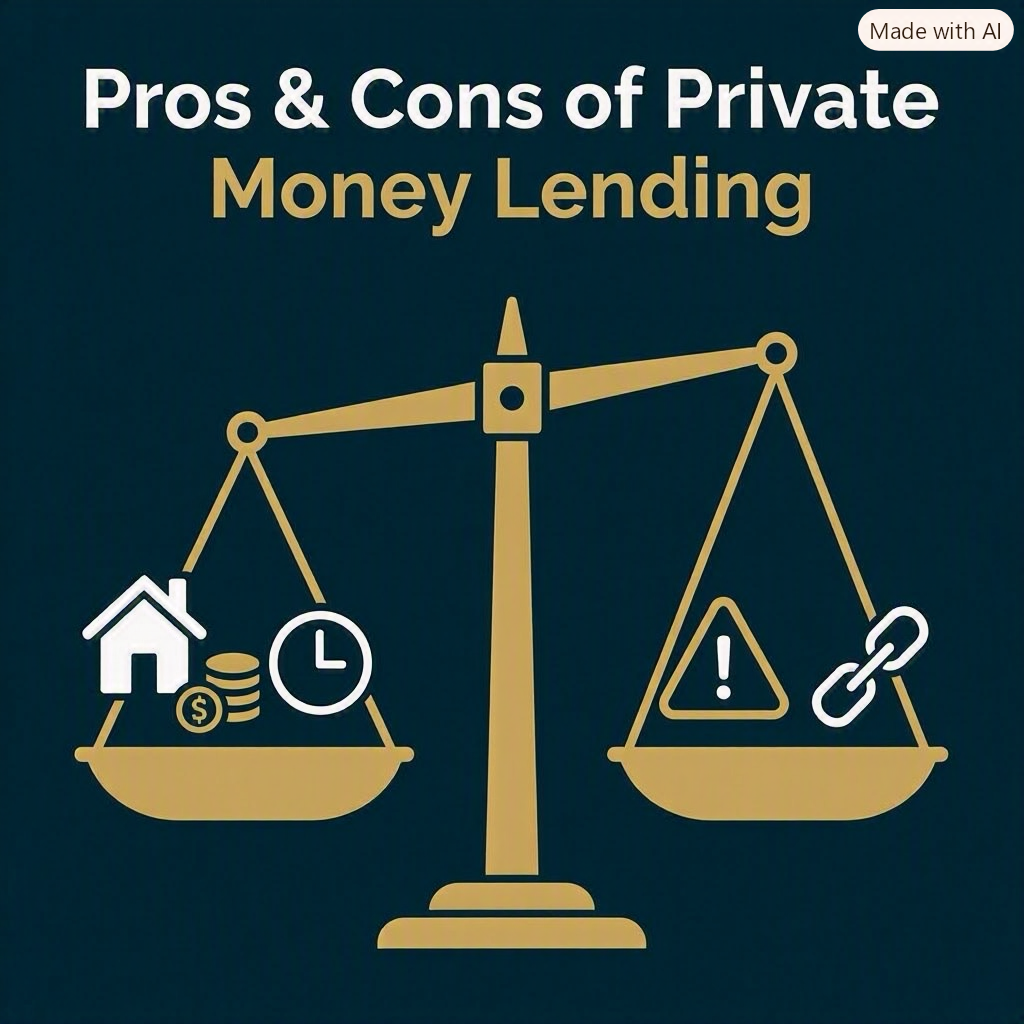 Like any financial tool, private money lending has advantages and drawbacks. Whether you’re the borrower or the lender, understanding both sides helps you make smarter decisions. Let’s break it all down.
Pros for Borrowers
Speed: Close in 7–14 days vs. 30–60 for banks. In competitive markets, this wins deals.
Flexibility: Lend on distressed properties, unconventional situations, and LLC-owned entities—things banks refuse.
Less Documentation: No tax returns, no income verification, no debt-to-income ratios. The asset does the talking.
Negotiable Terms: Rate, term, and structure are all negotiable based on the deal and relationship.
Accessible to New Investors: Even without a long credit history, if the deal is solid, you can get funded.
Cons for Borrowers
Higher Rates: 8–12% vs. 5–7% for conventional loans. The flexibility premium is real.
Shorter Terms: 6–24 months means you must have a clear exit strategy or risk a balloon payment you can’t meet.
Points and Fees: 1–3 origination points add upfront cost to every deal.
Relationship Risk: Borrowing from people you know adds personal stakes if something goes wrong.
Pros for Lenders
Higher Returns: 8–12% returns secured by real estate—far better than savings accounts or CDs.
Collateralized: You’re backed by real property. If the borrower defaults, you have a legal path to recover.
Passive Income: Once funded, you collect monthly interest with no property management headaches.
Short Terms: 6–12 month loans recycle capital quickly for the next opportunity.
Cons for Lenders
Illiquidity: Your capital is tied up for the loan term—no easy exit like selling a stock.
Default Risk: If the borrower defaults, foreclosure is time-consuming and costly.
Market Risk: If property values drop, your collateral value drops with it.
Due Diligence Required: You must evaluate deals carefully. Lazy lending leads to losses.
Is Private Money Lending Worth It?
For borrowers: Yes—when the deal math supports the higher rate and you have a clear exit.
For lenders: Yes—when you’ve done proper due diligence and lend conservatively (under 70% LTV).
Learn more about how this works in practice: how to structure a private money deal and what to expect from private money lending rates.
Leave a Reply